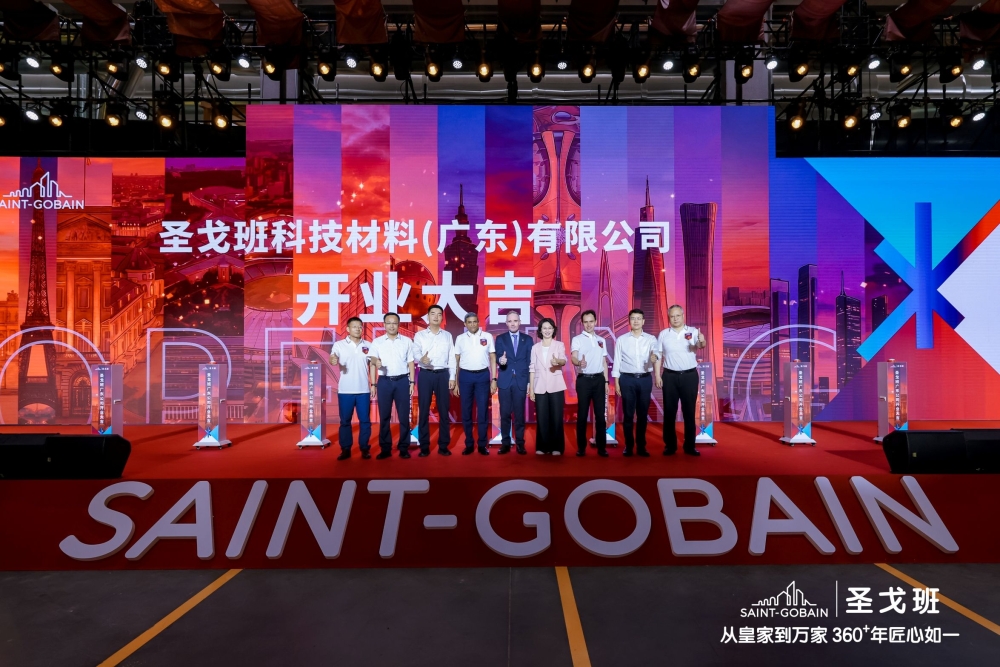
On July 10, the opening ceremony of Saint-Gobain Innovation Materials (Guangdong) Co., Ltd. was held in Kaiping, Guangdong Province, China.
Laurent Legodec, Consul General of France in Guangzhou; Wu Xiaohui, Mayor of Jiangmen; Zheng Xiaoyi, Executive Deputy Mayor of Jiangmen; Liang Guangting, Mayor of Kaiping; Sreedhar N., SVP and CEO of Asia Pacific and India Region; Ludovic Weber, CEO Asia; Paul Sheng, VP of Operational Excellence Asia and CEO of Gypsum, Insulation and Glassware China; Peter Zhu, Managing Director of Gypsum China; and more than 300 partners from across the country attended the ceremony.
With a total investment of approximately RMB 400 million and covering a site of 120 acres, the facility sets new benchmarks in capacity, speed and environmental responsibility.
Largest Single-Line Plasterboard Facility in Asia
The plant is Saint-Gobain's sixth plasterboard production base in China, with an annual output of 64 million square meters, the largest single-line automated production facility in Asia.
With existing bases in East, Central, and Northeast China, Saint-Gobain previously served the South China market through cross-regional supply. The new plant will significantly shorten the supply radius, improving logistics efficiency, response speed and product stability.
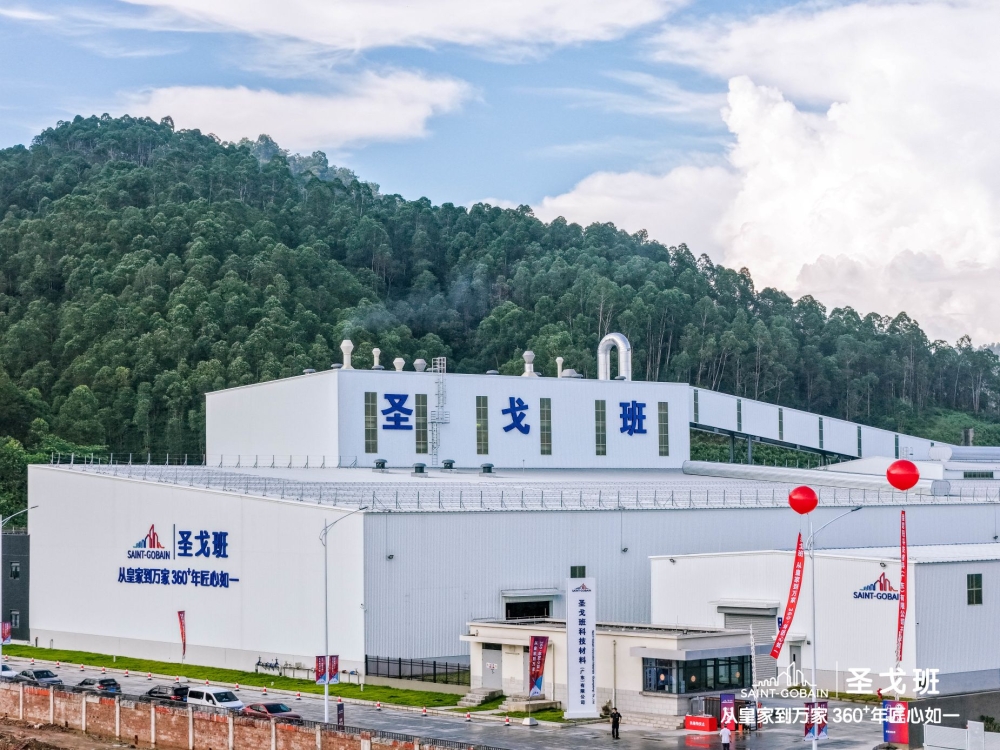
At full capacity, the plant is expected to generate RMB 650 million in annual output value and create about 150 local jobs.
15-Month Construction
Construction began in March 2025 and production commenced in July 2026. The 15-month construction period demonstrates exceptional efficiency for a project of this scale.
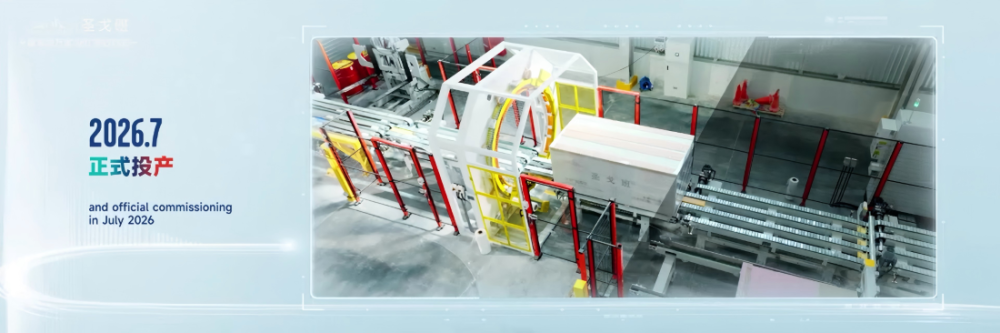
The rapid progress was enabled by efficient teamwork and the full government support from Jiangmen and Kaiping authorities.
Low-Carbon Production
The Kaiping plant utilizes industrial by-product as the main raw material, recycling approximately 500,000 tons annually and transforming industrial waste into valuable resources. The facility also runs on clean natural gas with waste heat recovery, photovoltaic power generation, and closed-loop water system to reduce energy consumption and carbon emissions.
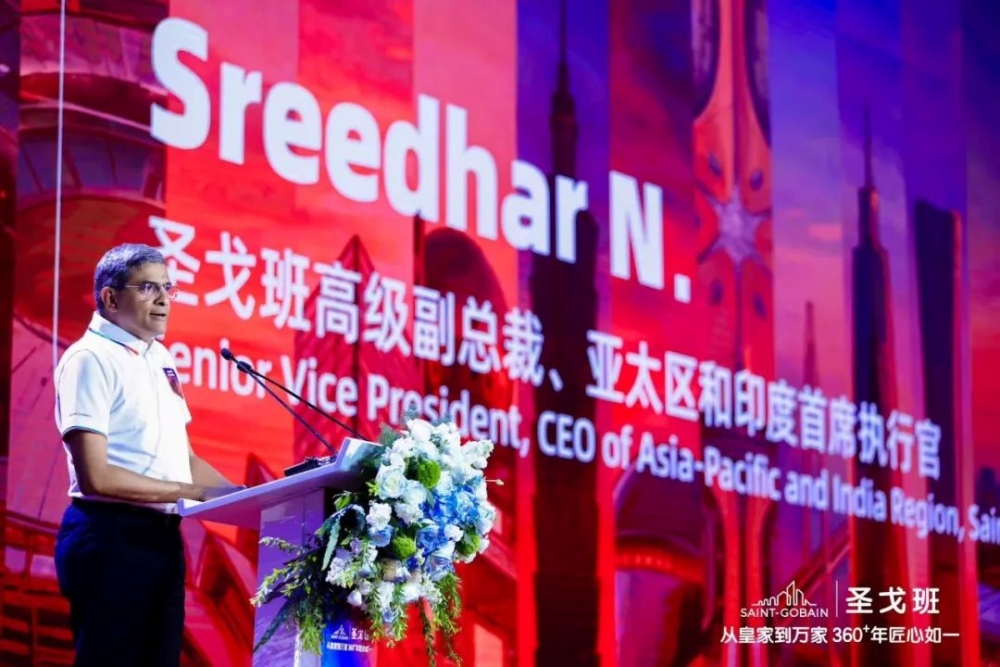
Sreedhar N. stated that the plant integrates the company's latest technologies to ensure high quality and strict environmental standards.
At the ceremony, Peter Zhu signed a strategic cooperation agreement on behalf of the company with SGS China. Zhu noted that quality is now a "ticket to the market," as demand for sustainable, low-carbon, and durable products rises. Saint-Gobain and SGS share a common commitment to standards and authenticity.
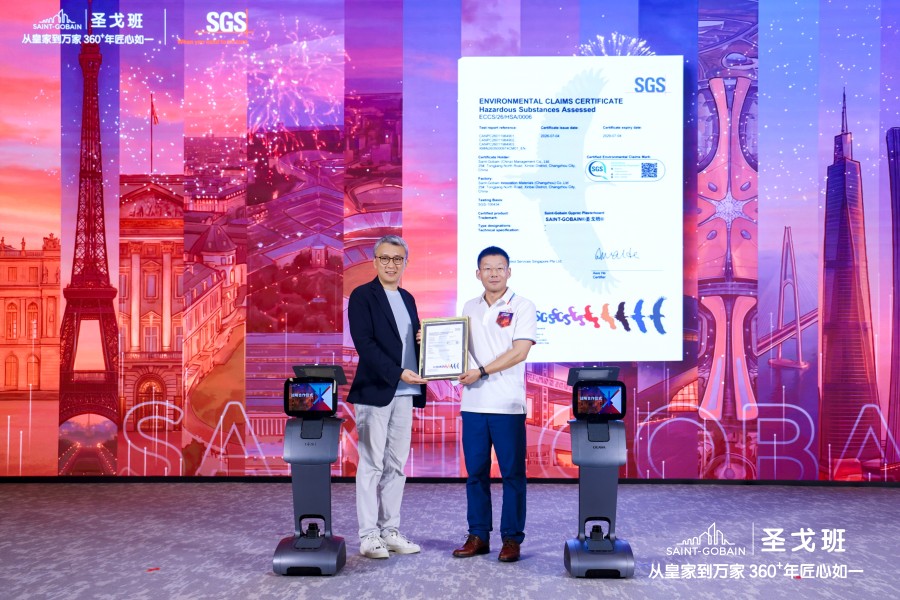
SGS also presented Saint-Gobain with the industry's first Green Label "Hazardous Substance Assessment" certificate for gypsum products. This confirms that hazardous substance control for the relevant products has passed SGS's independent evaluation, meets environmental attribute requirements, and provides credible assurance for consumer health and the sustainable development of the building materials industry.
Stanley Du, Chief Operating Officer of SGS Asia Pacific, stated that SGS will provide comprehensive quality testing and safety assurance for Saint-Gobain's products in key areas such as building material reliability and hazardous substance control.
By 2025, Saint-Gobain had already reduced its carbon emissions by 35% compared to 2017 and committed to achieving net-zero carbon emissions by 2050. The launch of the Kaiping plant represents the implementation of this commitment in South China and embodies Saint-Gobain's strategic layout and sustainability pledge.